
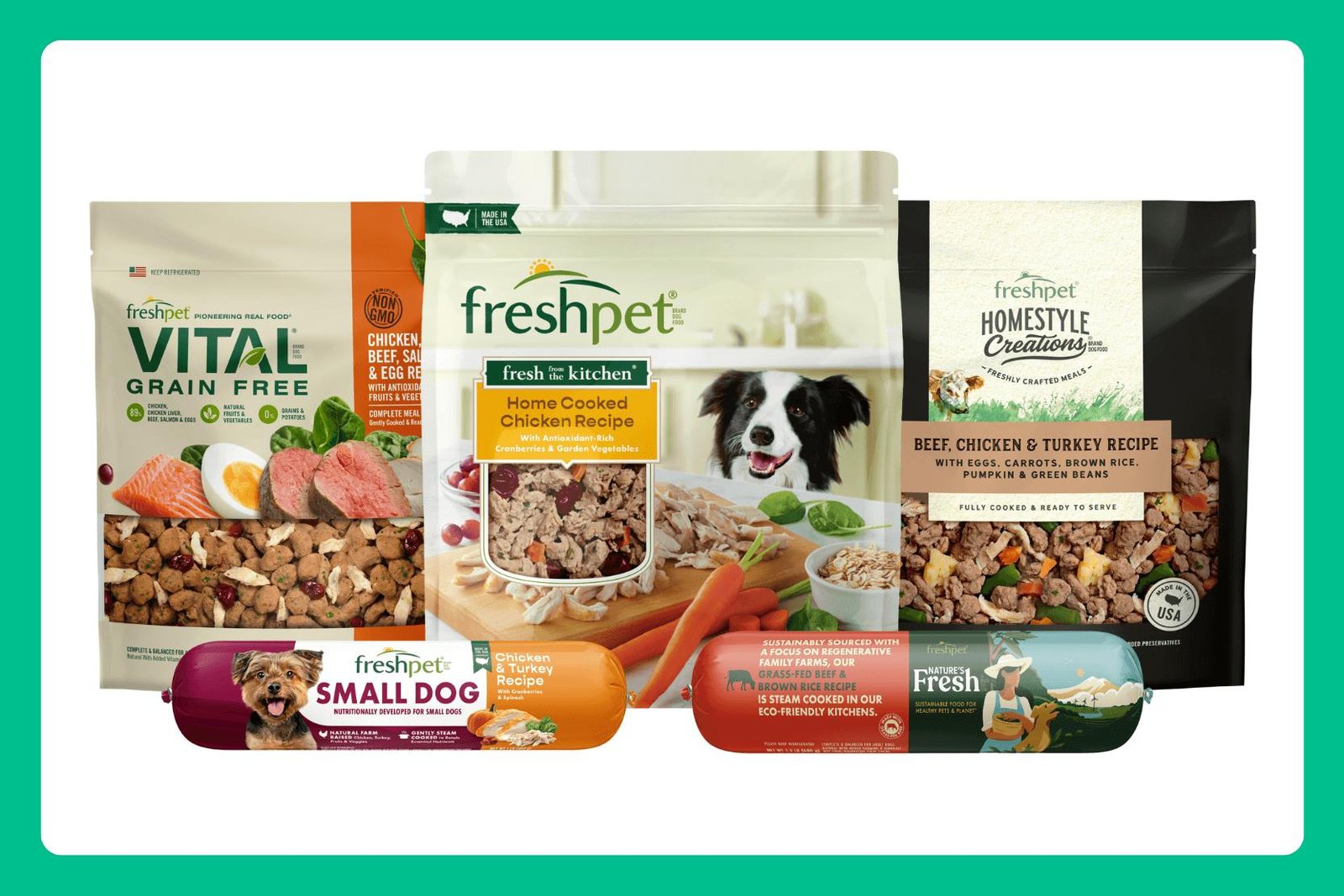
Fresh dog food has become increasingly popular among pet owners who want to offer their dogs meals that feel closer to home-cooked food. Among the best-known brands in this category is Freshpet, which sells refrigerated dog food made with ingredients such as meat, vegetables, and grains in selected recipes. Its products are widely available in the United States, making them an appealing alternative to traditional dry kibble.
But is Freshpet good for dogs, and does refrigerated food offer meaningful advantages over conventional dog food? The answer depends on the particular recipe, your dog’s nutritional needs, your budget, and how carefully the food is stored and served.
Freshpet can be a suitable choice for many healthy dogs when the selected formula provides complete and balanced nutrition for their life stage. However, fresh-looking ingredients and refrigeration alone do not automatically make a food healthier than every alternative.
This guide examines Freshpet’s potential benefits, nutritional considerations, ingredients, safety precautions, and cost to help you decide whether it belongs in your dog’s feeding routine.
Table of Contents
- What Is Freshpet Dog Food?
- Is Freshpet Good for Dogs?
- Potential Benefits of Freshpet
- Freshpet Ingredients and Nutritional Quality
- Is Freshpet Safe for Dogs?
- Possible Drawbacks and Side Effects
- Freshpet vs. Dry Kibble
- Which Dogs May Benefit Most?
- How to Introduce Freshpet to Your Dog
- How Much Does Freshpet Cost?
- Frequently Asked Questions
- Final Verdict
1. What Is Freshpet Dog Food?
Freshpet is a pet food brand known for refrigerated meals, rolls, and other fresh-style products. Unlike conventional shelf-stable kibble, many Freshpet recipes are kept in refrigerated sections of grocery stores and pet retailers.
The brand offers different formulations, including meals made with chicken, beef, turkey, vegetables, and other ingredients. Exact ingredients, calorie levels, and nutritional profiles vary by product.
Freshpet uses refrigeration to preserve its products, but the term fresh should not be confused with raw or homemade food. Many of its foods undergo processing designed to reduce harmful microorganisms and make the finished product suitable for feeding when handled correctly.
The most important distinction is between a product that is marketed as fresh and one that is nutritionally complete. A refrigerated meal may contain appealing ingredients, but it still needs appropriate levels of protein, fat, vitamins, minerals, and other essential nutrients to support a dog’s health.
Before buying a particular recipe, read the packaging carefully to determine whether it is intended as a complete meal or only as a topper or supplemental food.
2. Is Freshpet Good for Dogs?
For many dogs, yes. Freshpet can provide a convenient, palatable source of nutrition when the chosen formula is complete and balanced for the dog’s life stage.
Its suitability, however, should be judged by nutritional adequacy and the individual dog’s response rather than by marketing claims alone.
Nutritional adequacy matters most
Look for a nutritional adequacy statement on the package. In the United States, products may state that they are formulated to meet the nutritional levels established by the Association of American Feed Control Officials (AAFCO) for a specified life stage, or that feeding trials substantiate the claim.
Puppies, adult dogs, and pregnant or nursing dogs can have different nutritional requirements. A recipe suitable for adult maintenance should not automatically be assumed to meet the needs of a growing puppy.
In the UK, look for appropriate life-stage information and evidence that the food is formulated as a complete pet food under applicable feed regulations.
Individual needs make a difference
A healthy adult dog with no dietary restrictions may do well on a suitable Freshpet formula. A dog with pancreatitis, kidney disease, food allergies, or another medical condition may need a carefully selected diet recommended by a veterinarian.
Freshpet is not automatically better than a high-quality dry food simply because it is refrigerated. Both fresh and dry diets can provide excellent nutrition when properly formulated.
The practical question is whether the particular food meets your dog’s needs, is affordable enough to feed consistently, and agrees with your dog’s digestion.
3. Potential Benefits of Freshpet
Appealing taste and texture
Some dogs find refrigerated food more appealing than dry kibble because it has a softer texture and a different aroma. This may be useful for selective eaters who regularly leave dry food in their bowls.
However, not every dog prefers fresh-style food, and improved appetite should not be used to dismiss an unexplained loss of appetite. A dog that suddenly refuses food may need veterinary attention.
Moisture content
Fresh-style foods generally contain considerably more moisture than dry kibble. Additional dietary water can contribute to overall water intake, although dogs should always have access to clean drinking water.
Moisture content does not, by itself, establish that a food is nutritionally superior. Compare calories and nutrients on a dry-matter basis when evaluating products with different water levels.
Clearly listed ingredients
Many Freshpet recipes list recognizable ingredients, including named animal proteins and selected vegetables. This can make it easier for owners to understand what a particular formula contains.
Nevertheless, recognizable ingredients do not guarantee digestibility, nutritional balance, or superior health outcomes. The complete formulation matters more than the appearance of its ingredient list.
Convenient meal preparation
Freshpet offers an alternative for people who want something different from dry kibble without preparing a dog’s meals from scratch.
For busy households, a ready-to-serve refrigerated food can simplify feeding. Owners still need to follow storage instructions, observe the use-by date, and measure portions according to calorie needs.
A possible option for picky eaters
Some dogs respond positively when their meals have a softer consistency or stronger aroma. Freshpet may help in these cases, either as a complete diet or, where appropriate, as a small addition to an otherwise balanced meal.
If you use it as a topper, keep supplemental foods within your veterinarian’s recommended calorie allowance. Treats and extras generally should account for no more than 10% of a dog’s daily calories unless a veterinary professional advises otherwise.
4. Freshpet Ingredients and Nutritional Quality
Understanding the ingredient list is one of the best ways to assess a refrigerated dog food.
Protein sources
Freshpet recipes may include chicken, beef, turkey, or other animal proteins. Protein supports muscle maintenance, tissue repair, immune function, and many normal bodily processes.
The presence of meat is useful information, but the ingredient list alone cannot tell you whether the finished food supplies the right amount and balance of essential amino acids. Nutritional analysis and the adequacy statement are more informative.
Vegetables and grains
Depending on the formula, ingredients may include carrots, peas, spinach, rice, or other plant-based components. These can contribute carbohydrates, fibre, vitamins, and minerals.
Grains are not inherently harmful to dogs, and most healthy dogs can digest properly cooked grains. Grain-free food is not automatically healthier, so there is little reason to avoid grains unless a veterinarian identifies a specific need.
Fat and calories
Fat provides concentrated energy and essential fatty acids. The amount is especially important for dogs that are overweight, prone to digestive problems, or require a restricted diet.
Check the calories per serving rather than judging portions by volume alone. A seemingly small amount of fresh food can provide a substantial number of calories.
Vitamins and minerals
A balanced dog food must supply the appropriate amounts of essential vitamins and minerals, not just meat and vegetables. These nutrients support bones, nerves, metabolism, blood cells, and other important functions.
For that reason, a commercial complete-and-balanced formula is generally more reliable as a daily diet than an improvised mixture of meat and vegetables.
What to check on the label: the intended life stage, nutritional adequacy statement, calorie content, feeding directions, ingredient list, and storage instructions. These details provide a stronger basis for evaluating a food than the word fresh alone.