
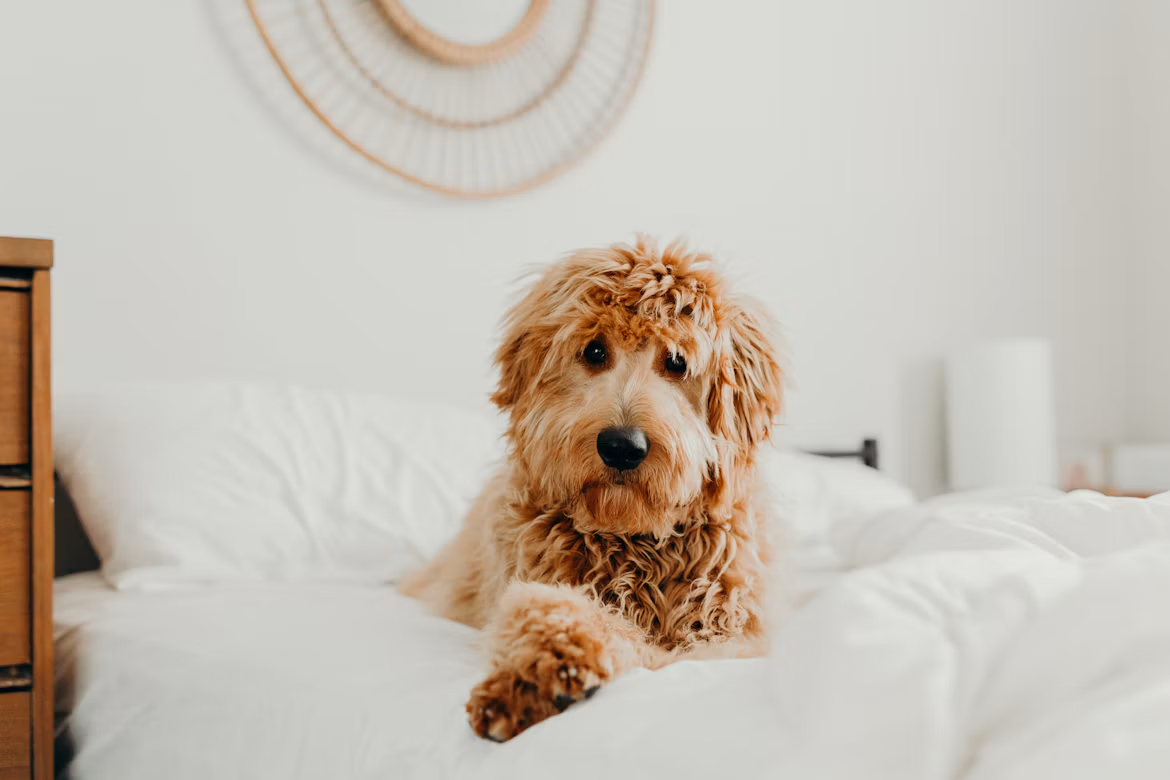
A Mini Goldendoodle combines the friendly nature of a Golden Retriever with the intelligence and curly or wavy coat of a Miniature or Toy Poodle. These small, people-oriented dogs have become popular with families, couples, and individuals looking for an affectionate companion that can adapt to a range of living situations.
However, their small size does not mean they are effortless pets. They need daily exercise, regular coat maintenance, early training, and plenty of companionship. Their appearance, adult size, shedding, and temperament can also vary depending on genetics and breeding.
If you are considering bringing one home, understanding the breed’s needs will help you decide whether it fits your lifestyle. This guide covers everything from size and personality to grooming, feeding, health considerations, puppy prices, and choosing a responsible breeder.
Table of Contents
- What Is a Mini Goldendoodle?
- Mini Goldendoodle Size and Appearance
- Temperament and Personality
- Exercise and Daily Activity
- Grooming and Coat Care
- Feeding and Nutrition
- Training and Socialization
- Common Health Concerns
- Mini Goldendoodle Lifespan
- Cost of Buying and Owning One
- Is a Mini Goldendoodle Right for You?
- How to Choose a Responsible Breeder
- Frequently Asked Questions
- Final Thoughts
1. What Is a Mini Goldendoodle?
A Mini Goldendoodle is a cross between a Golden Retriever and a Miniature Poodle, although some breeding programs use Toy Poodles to produce smaller dogs. Because it is a crossbreed rather than a consistently standardized purebred, individual dogs can differ considerably in size, coat texture, appearance, and behaviour.
The goal of this cross is generally to combine the Golden Retriever’s affectionate, sociable personality with the Poodle’s intelligence and smaller body size.
Mini Goldendoodles are sometimes described as designer dogs. They may inherit a Golden Retriever’s soft, straight coat, a Poodle’s tighter curls, or a wavy coat somewhere between the two. Their appearance cannot be guaranteed simply by looking at their parents.
These dogs are often attractive to people who want a companion that enjoys family activities without the larger physical size of a standard Goldendoodle.
It is important to remember that no crossbreed is automatically hypoallergenic. Some Mini Goldendoodles shed less than others, but every dog produces allergens through sources such as skin flakes and saliva. People with allergies should spend time around the particular dog before committing to ownership.
2. Mini Goldendoodle Size and Appearance
One of the most common questions prospective owners ask is how big these dogs will become. The answer depends on the size of the Poodle parent, the Golden Retriever’s genetics, and the puppy’s individual growth pattern.
Average size and weight
| Size characteristic | Typical estimate |
|---|---|
| Height | Approximately 13–20 inches (33–51 cm) |
| Weight | Approximately 15–35 pounds (7–16 kg) |
| Lifespan | Often around 10–15 years |
| Coat | Wavy, curly, or occasionally straighter |
| Common colours | Cream, apricot, red, chocolate, black, and parti-colour |
These figures are general estimates, not guaranteed breed standards. Some dogs may fall outside these ranges, particularly when their parents differ considerably in size.
A puppy’s size at eight or twelve weeks cannot reliably predict its final adult weight on its own. Ask the breeder about both parents, previous litters, and the growth of related dogs.
Common coat colours and types


Coat colour is largely a matter of inherited genetics. Cream and apricot dogs are popular, but darker red, chocolate, black, and multicoloured coats are also possible.
Coat texture matters more for everyday care than colour. A tightly curled coat may trap loose hair and develop mats, while a straighter coat may shed more visibly. Both can require consistent brushing.
3. Temperament and Personality
The breed is generally known for being affectionate, playful, intelligent, and people-oriented. Many enjoy following their owners from room to room, joining family activities, and learning games that challenge their minds.
However, temperament is not guaranteed by crossbreeding. Genetics, early experiences, socialisation, and training all influence how an individual dog behaves.
Are they good family dogs?
They can make excellent family companions when properly socialised. Their playful nature may suit households with older children, while their smaller size can make them easier to manage than a standard-sized Goldendoodle.
Young children should always be supervised around dogs. Small dogs can be injured by accidental falls, rough handling, or overly enthusiastic play, so children need to learn respectful interactions.
Do they get along with other pets?
Many live comfortably with other dogs and can learn to coexist with cats. Gradual introductions, positive reinforcement, and separate resting spaces help create a smoother transition.
Can they be left alone?
These dogs often form strong attachments to their families. Long periods alone may lead to boredom, barking, destructive behaviour, or separation-related distress.
Teach your puppy to spend short periods alone gradually, providing a comfortable resting area and suitable enrichment. If your schedule regularly keeps you away for an entire working day, consider a dog walker, trusted pet sitter, or suitable dog-care arrangement.
4. Exercise and Daily Activity
Although relatively small, these dogs are often energetic and curious. They benefit from daily movement, play, and mental stimulation rather than simply having access to a garden.
Many adult dogs do well with approximately 30–60 minutes of daily activity, adjusted for age, health, fitness, and individual energy levels.
A balanced routine might include:
- Morning: A walk with time to sniff and explore.
- Afternoon: Short training sessions, food puzzles, or indoor play.
- Evening: Another walk, gentle games, and relaxed family time.
Puppies need shorter, age-appropriate activities with plenty of rest. Avoid forcing young dogs into prolonged running or strenuous repetitive exercise while their bodies are developing.
Mental exercise matters just as much. Teaching new commands, hiding treats for a supervised search game, or rotating toys can help prevent boredom.
Apartment living can work well if the dog receives enough activity, toilet breaks, training, and companionship. A large garden is helpful but does not replace regular interaction with its owner.
5. Grooming and Coat Care
Grooming is one of the biggest ongoing responsibilities for owners. A soft, fluffy coat can look low-maintenance, but curls and waves may tangle close to the skin if they are neglected.

How often should you brush?
Brush the coat several times a week, ideally daily if it is dense or curly and prone to matting. Use a suitable slicker brush and metal comb, checking that the comb can pass gently through the coat all the way to the skin.
Pay particular attention to areas behind the ears, under the collar, around the legs, beneath the tail, and between the harness straps.
Professional grooming
Many owners schedule professional grooming approximately every four to eight weeks, depending on coat length, texture, and maintenance needs.
A groomer can bathe, dry, trim, and check the coat for tangles. Keeping the hair shorter can simplify maintenance, although regular brushing remains necessary.
Other essential tasks include:
- Trimming nails before they become uncomfortable.
- Brushing teeth with dog-safe toothpaste.
- Checking ears for redness, odour, or unusual discharge.
- Keeping hair around the eyes neatly trimmed when necessary.
- Using dog-safe shampoo and drying the coat thoroughly.
Introduce grooming tools slowly from puppyhood, pairing handling with treats and praise. This helps make future appointments less stressful.
6. Feeding and Nutrition
A healthy diet supports growth, muscle development, energy, and coat condition. Choose a complete and balanced food appropriate for the dog’s life stage, whether puppy, adult, or senior.
Puppies need food formulated for growth, while adults generally require a maintenance diet. Feeding amounts should be based on the food’s calorie content, the dog’s weight, activity level, and body condition.
How much should you feed?
There is no single correct portion for every dog. Start with the manufacturer’s feeding guidance, divide the daily amount into suitable meals, and adjust according to weight changes and veterinary advice.
For puppies, several smaller meals throughout the day are often practical. Many adults do well with two meals daily.
Avoid leaving unlimited food available if your dog tends to overeat. Measure portions, count training treats as part of daily intake, and provide fresh drinking water.
What foods should you avoid?
Do not feed chocolate, grapes, raisins, onions, garlic in unsafe quantities, xylitol-containing products, or alcohol. Cooked bones can splinter, and fatty leftovers may cause digestive problems.
If you want to prepare a home-cooked diet, consult a veterinary nutrition professional to ensure it meets your dog’s nutritional requirements. A diet that looks healthy is not necessarily nutritionally complete.
7. Training and Socialisation
Intelligence can make training rewarding, but clever dogs can also develop undesirable habits if their needs are overlooked.
Begin with short, positive sessions that teach practical behaviours such as responding to their name, coming when called, walking on a loose lead, settling on a mat, and waiting calmly at doors.
Essential training priorities
- Toilet training: Establish a consistent schedule and reward toileting in the correct place.
- Recall: Practise coming when called in secure areas before attempting more distracting environments.
- Lead manners: Reward calm walking instead of allowing pulling to become a habit.
- Socialisation: Introduce different people, sounds, surfaces, and environments gradually and positively.
- Alone-time training: Build independence through brief, comfortable periods of separation.
Puppy classes can help with basic manners and controlled social experiences. Avoid overwhelming a young puppy with unfamiliar dogs or busy environments, and follow your veterinarian’s advice about safe exposure before vaccinations are complete.
Consistency is more effective than punishment. Rewarding the behaviour you want helps build trust and makes learning enjoyable.
8. Common Health Concerns
Crossbreeds can inherit health problems from either parent. Being a crossbreed does not automatically make a dog healthier, and responsible breeding remains important.
Potential concerns include:
- Hip dysplasia: An abnormal hip joint that may contribute to pain and mobility problems.
- Patellar luxation: A condition in which the kneecap slips out of its normal position.
- Eye disorders: Certain inherited eye conditions can affect vision.
- Ear infections: Floppy ears and moisture can contribute to ear problems in some dogs.
- Dental disease: Smaller dogs may be particularly vulnerable to plaque accumulation and dental problems.
- Skin allergies: Itching, redness, or recurrent ear problems may indicate an underlying issue.
The Poodle Club of America recommends relevant health screening for breeding Poodles, including eye examinations, patellar evaluation, and hip assessment for Miniature Poodles. Golden Retriever health screening also covers conditions affecting the hips, elbows, eyes, and heart.
When buying a puppy, ask for documented health results for both parents rather than accepting verbal assurances that they are healthy.
Arrange routine veterinary examinations, keep vaccinations and parasite prevention current according to local recommendations, and seek advice if you notice persistent itching, limping, changes in appetite, or unusual behaviour.
Sudden breathing difficulty, collapse, severe pain, or suspected poisoning requires urgent veterinary attention.
9. Mini Goldendoodle Lifespan
Many small-to-medium Goldendoodles live approximately 10–15 years, although individual lifespans vary with genetics, body size, preventive healthcare, and lifestyle. This is an estimate rather than a guarantee.
You can support long-term wellbeing by maintaining a healthy weight, providing regular exercise, brushing teeth consistently, arranging preventive veterinary care, and monitoring changes in mobility or behaviour as your dog ages.
Senior dogs may benefit from shorter walks, non-slip flooring, comfortable bedding, and adjustments to their diet when recommended by a veterinarian.
10. Cost of Buying and Owning One
The purchase price varies widely between the United States and the United Kingdom. Location, breeder practices, parental health testing, demand, and the puppy’s background can all influence the price.
Rather than relying on one advertised figure, compare several reputable breeders and examine what the price includes.
Your ongoing budget should account for:
| Expense | What to consider |
|---|---|
| Food | Quality, portion size, and life stage |
| Grooming | Regular professional appointments and home supplies |
| Veterinary care | Routine examinations, vaccinations, and unexpected treatment |
| Insurance | Coverage limits, exclusions, and premiums |
| Equipment | Lead, harness, bed, crate, and enrichment toys |
| Training | Puppy classes or individual support |
| Pet care | Dog walkers, boarding, or pet sitters |
Grooming can become a substantial recurring cost, particularly for dogs that need frequent clipping and coat maintenance.
Before bringing a puppy home, calculate a realistic monthly budget and keep an emergency fund for unexpected veterinary bills. Adoption through a reputable rescue organisation may also be worth considering.
11. Is a Mini Goldendoodle Right for You?
This crossbreed may be a good fit if you want an affectionate companion, enjoy daily walks and interactive play, and can commit to regular grooming and training.
It may be less suitable if you need a dog that can routinely stay alone for long periods, want a genuinely maintenance-free coat, or cannot accommodate ongoing grooming expenses.
Think about your household’s daily rhythm rather than choosing a dog based only on its appearance.
For example, someone who works from home and enjoys regular outdoor breaks may be well suited to an energetic companion. Someone who travels frequently or spends most of the day away may need additional support to meet the dog’s social and exercise needs.
No dog is perfectly predictable. Meeting the puppy’s parents, asking about temperament, and speaking honestly with the breeder about your lifestyle can help you make a more informed decision.
12. How to Choose a Responsible Breeder
A responsible breeder prioritises health, temperament, and appropriate puppy development over appearance or unusual marketing labels.
Before making a commitment, look for the following:
- Health screening records for both parent dogs.
- A clean, safe environment where puppies receive appropriate care.
- Honest information about expected adult size and coat maintenance.
- Opportunities to meet the mother and observe her behaviour.
- Veterinary records, vaccination information, and identification details appropriate to the puppy’s age and location.
- A written contract and a clear policy for returning or rehoming a dog if circumstances change.
- Willingness to answer questions and discuss the breed’s limitations.
Be cautious of sellers who promise a guaranteed adult weight, claim every puppy is allergy-proof, refuse to provide health records, or pressure you into paying immediately.
In the United States, check applicable state and local breeding regulations. In the UK, review relevant licensing requirements and guidance from reputable animal-welfare organisations. Avoid choosing a seller solely because they advertise rare colours or extremely small puppies.
A thoughtful breeder should also ask questions about your household, working schedule, previous experience with dogs, and plans for training and grooming.
13. Frequently Asked Questions
Are Mini Goldendoodles hypoallergenic?
No dog can be guaranteed hypoallergenic. Some shed less than others, but coat type varies, and allergens are not limited to loose hair. Spend time around the dog before adopting if allergies are a concern.
Do they bark a lot?
Some are relatively quiet, while others bark to alert their owners, express excitement, or respond to boredom. Early training, sufficient activity, and gradual independence training can help manage excessive barking.
Are they easy to train?
Many learn quickly because they are intelligent and people-oriented. However, success depends on consistent training, positive reinforcement, socialisation, and the dog’s individual temperament.
Can they live in an apartment?
Yes, provided they receive appropriate exercise, toilet breaks, mental stimulation, and companionship. Their suitability depends more on their needs being met than on the size of the home alone.
How big will my puppy get?
Adult size depends on genetics and the sizes of both parents. Ask the breeder for parental measurements and information about previous litters, but treat any predicted adult weight as an estimate.
Do they shed?
Shedding varies. Dogs with curlier coats may shed less visibly, while those with straighter coats may leave more loose hair around the home. Regular grooming is important regardless of coat type.
Are they suitable for first-time owners?
They can be, especially for people willing to learn about training, grooming, exercise, and preventive healthcare. First-time owners should be prepared for the time and cost involved rather than assuming a small dog will automatically be easy to manage.
14. Final Thoughts
A Mini Goldendoodle can be a loving, playful, and intelligent addition to the right household. Its manageable size and sociable personality are appealing, but responsible ownership requires more than providing food, shelter, and occasional walks.
Regular brushing, professional grooming, positive training, daily activity, and preventive veterinary care are all important parts of keeping these dogs comfortable and healthy. Their size, shedding, and temperament can vary, so prospective owners should look beyond photographs and marketing promises.
Take time to research breeders, review health documentation, meet the parent dogs when possible, and consider the long-term financial and practical commitment. With thoughtful preparation and consistent care, you can give your new companion a strong foundation for a happy life.