
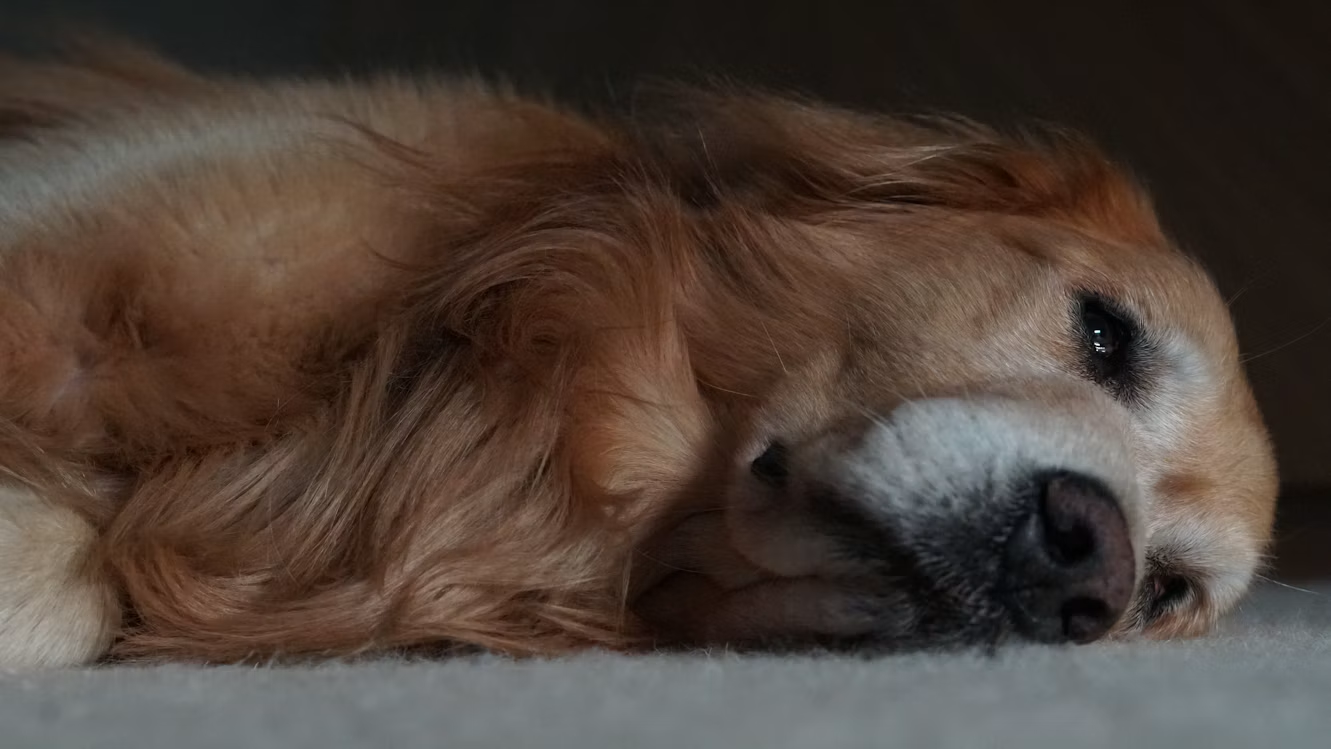
Many dog owners have experienced the same quiet moment: your dog circles their bed, drops heavily onto the floor, rests their chin on their paws, and lets out a long, audible breath. If you are wondering, “why does my dog sigh when laying down,” the answer usually comes down to canine communication and how dogs transition between physical states.
Unlike humans, who often sigh out of emotional exhaustion, stress, or relief, dogs primarily use a deep exhalation to signal a physical and mental shift. Most of the time, this is a completely normal resting behavior. However, reading your dog’s body language and the context of the sigh can tell you whether they are settling in for a comfortable nap, expressing mild frustration, or showing subtle signs of physical discomfort.
Here is how to decode exactly what your dog’s sighs mean.
The Short Answer: Why Dogs Sigh When They Settle Down
In most cases, a dog sighs when laying down because they are consciously relaxing. This deep exhalation acts as a physiological reset button. It signals the end of an activity and the beginning of a resting state. When a dog releases a long, drawn-out breath, their heart rate slows down, their muscles un-tense, and they are preparing their body to transition into sleep.
However, dog vocalizations are highly dependent on context. To understand what the sigh means, you have to look at what the rest of their body is doing.
Contentment vs. Frustration: Reading the Sigh
According to animal behaviorists, a dog’s sigh generally falls into one of two categories: the content sigh and the frustrated sigh. You can tell them apart by observing your dog’s facial expressions and posture.
The Content Sigh (Relaxation)
If your dog sighs as they curl up or rest their chin flat on the ground, they are likely self-soothing and settling down.
- Eyes: Half-closed, blinking slowly, or completely shut.
- Body Language: Loose muscles, ears in a natural resting position, and a relaxed tail.
- Meaning: “I am safe, I am comfortable, and I am ready to rest.”
The Frustrated Sigh (Giving Up)
Sometimes, a dog will let out a sharp sigh or a huff when an expected outcome doesn’t happen—such as you finishing your dinner without sharing a bite, or concluding a play session before they were ready to stop.
- Eyes: Wide open, often staring directly at you.
- Body Language: Tense, head elevated, sometimes accompanied by pacing before finally dropping to the floor.
- Meaning: “I guess we aren’t going for a walk, so I will just lay here.”
Sighing vs. Groaning vs. Heavy Breathing
It is important to distinguish a normal sigh from other vocalizations or respiratory sounds that might indicate an underlying health issue. While a sigh is usually benign, groaning or huffing can mean something entirely different.
| Vocalization | Sound Characteristics | Common Meaning | When to Pay Attention |
| Sigh | A long, smooth exhalation through the nose or mouth. | Contentment, relaxation, or mild disappointment. | Completely normal behavior; no action needed. |
| Huffing | A short, sharp burst of air expelled quickly through the nose. | Annoyance, alerting behavior, or seeking attention. | Normal, but may indicate your dog wants something (food, play, or outside access). |
| Groaning | A low-pitched, rumbling vocalization from the throat. | “Growing pains,” physical stiffness, or settling deep into sleep. | Monitor if it happens every time they lay down or stand up, as it can indicate joint pain. |
| Heavy Breathing | Rapid, shallow, or labored intake and output of air. | Physical exertion, heat regulation (panting), or stress. | Seek veterinary care if accompanied by lethargy, pale gums, or if the dog is at rest in a cool room. |
Could It Be a Health Issue? When to See a Vet
While a deep sigh is part of normal dog body language, changes in how your dog breathes or settles down warrant a closer look.
If your dog frequently groans, moans, or whimpers when laying down, they may be experiencing physical discomfort. Conditions like osteoarthritis are incredibly common in senior dogs and can make the physical act of lowering their body to the floor painful. In these cases, the sound you hear is less of a relaxed sigh and more of a vocalization of joint stiffness.
You should schedule a veterinarian consultation if you notice your dog’s sighing is paired with any of the following clinical signs:
- Difficulty getting up or lying down.
- Reluctance to climb stairs or jump onto furniture.
- Lethargy or a sudden loss of appetite.
- Respiratory distress, such as wheezing, persistent heavy breathing, or coughing.
Frequently Asked Questions (FAQ)
Does a sigh mean my dog is happy or sad?
A sigh rarely indicates sadness in the way humans experience it. A sigh with half-closed eyes usually means your dog is happy, relaxed, and content. A sigh with open eyes usually indicates mild frustration or resignation, but not depression or deep sadness.
What is the difference between a dog sighing and groaning?
A sigh is primarily an exhalation of air, usually quiet and smooth. A groan involves the vocal cords, producing a low, rumbling sound. While some dogs groan simply because they are settling deeply into their beds, frequent groaning when changing positions can be a pain indicator, particularly in older dogs with arthritis.
Why does my dog huff when I tell them to lay down?
If you give a command and your dog huffs before complying, they are communicating mild annoyance or reluctance. Huffing is a sharp exhale that often serves as an attention-seeking behavior or a way to express that they are obeying, but they aren’t entirely thrilled about it.
Why does my dog sigh when I pet them?
If your dog sighs while you are petting or massaging them, it is a strong indicator of pleasure and relaxation. The physical contact helps lower their heart rate, and the deep exhalation shows they are leaning into the comfort of your touch.
Conclusion
Understanding your dog’s vocalizations is a key part of building a strong bond. The next time you hear your dog sigh when laying down, look at their eyes and body posture. If they are curled up with their eyes heavy, you can rest easy knowing they are simply transitioning into a comfortable, relaxed state. If their eyes are open and they are staring at the leash, they might just be waiting for their next adventure.