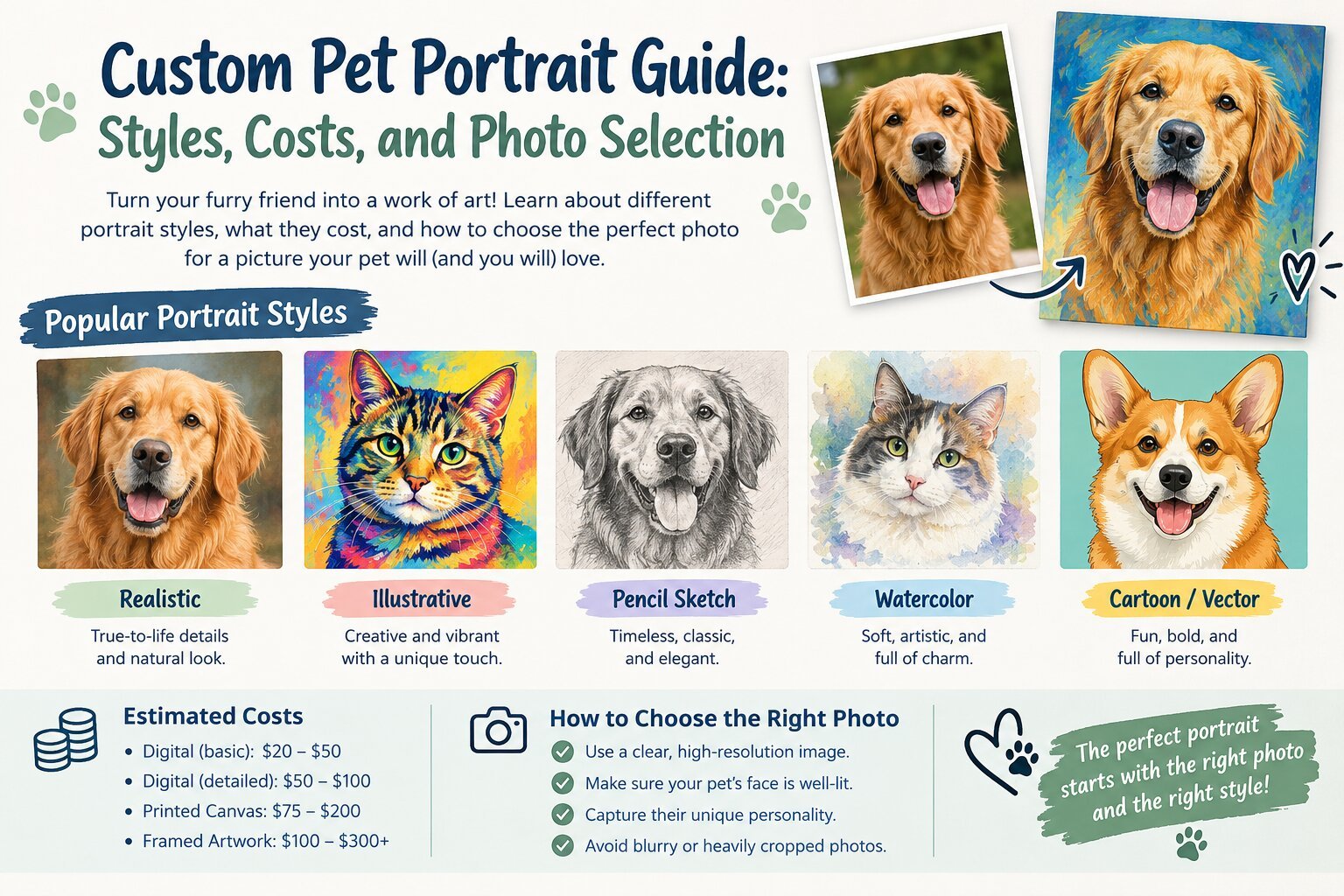
A custom pet portrait transforms a favorite photograph of a dog, cat, or other companion into a permanent, display-worthy piece of art. Rather than leaving everyday snapshots on a smartphone screen, pet owners regularly commission custom artwork to celebrate a living animal, mark a milestone, or create a lasting memorial.
The modern market spans everything from hand-painted oil canvases produced over several weeks to digital illustrations printed on textured fine-art paper. Finding the right option requires balancing artistic style, medium durability, turnaround time, and budget. This guide breaks down common portrait styles, explains how to pick or take reference photos that yield accurate results, outlines pricing expectations across the US and UK markets, and details what to verify before approving an order.
Popular Styles of Personalized Pet Art
Selecting the right style sets the visual mood of the finished piece. Custom artwork broadly divides into traditional fine art, modern digital illustration, and stylized thematic designs.
Traditional Hand-Painted Mediums
Traditional hand-painted portraits are created from scratch using physical pigments on canvas or paper.
- Oil on Canvas: Delivers deep pigmentation, visible brushwork texture, and exceptional longevity. Oil paintings take longer to finish due to extended drying times, often requiring four to eight weeks before shipping.
- Acrylics: Offers vibrant, opaque color similar to oils but dries rapidly, allowing for crisper edges and faster turnaround times.
- Watercolor: Features translucent washes, soft color gradients, and gentle textures on heavy cotton paper. This medium suits gentle, light-colored coats and expressive, soulful expressions.
- Charcoal and Graphite: Focuses entirely on contrast, shading, and anatomical detail without color distraction. Ideal for dramatic lighting and expressive monochrome studies.
Modern Digital Art and Fine Art Prints
In digital creation, an artist uses an electronic stylus and drawing tablet to illustrate the animal by hand. Once completed, the work is printed onto physical substrates using archival inks (often called giclée printing).
- Digital Painting: Replicates the blending and stroke techniques of physical oils or watercolors, offering high visual fidelity at a lower price point than physical canvases.
- Line Art and Minimalist Vector: Emphasizes simple continuous contours and flat color blocks. These clean aesthetics integrate naturally into contemporary interior designs.
- Photo-Artistry and Mixed Media: Blends the original photographic base with painterly digital overlays, providing a realistic depiction with textured accents.
Stylized and Thematic Concepts
For pet owners seeking humor or dramatic storytelling, themed artwork places animals into creative roles.
- Military Dog Portrait: Depicts a pet in historical regalia, such as an 18th-century general, naval officer, or field marshal. The humor relies on pairing an animal’s earnest facial expression with formal, ornate military uniforms.
- Renaissance and Royal Themes: Replaces historic noble figures with pets wearing velvet capes, lace ruffs, crowns, and aristocratic jewelry.
- Pop Art: Uses bold neon color palettes, strong contrast, and screen-print effects inspired by mid-century graphic movements.
| Medium / Style | Primary Aesthetic | Best For | Typical Production Timeline |
|---|---|---|---|
| Traditional Oil / Acrylic | Rich texture, visible brushstrokes | Statement art, heirloom keepsakes | 3 to 8 weeks |
| Watercolor | Soft edges, light washes | Expressive eyes, memorial tributes | 2 to 4 weeks |
| Digital Fine Art Print | Crisp details, vibrant color balance | Everyday gifting, modern wall decor | 1 to 2 weeks |
| Military / Royal Themed | Humorous, ornate, historical | Distinctive gifts, personality displays | 5 to 10 business days |
| Minimalist Line Drawing | Clean lines, neutral backgrounds | Contemporary, understated interiors | 3 to 7 business days |
How Reference Photos Shape Portrait Quality
An artist can only deliver an accurate likeness if the source image provides clear visual information. Blurry, poorly lit, or wide-angle smartphone photos distort fur patterns, facial structure, and eye color.
To capture or select the best reference images:
- Get to Eye Level: Crouch down so the camera lens sits directly parallel to the pet’s gaze. Shooting from standing height looking downward creates a distorted perspective with an unnaturally enlarged head and compressed body.
- Use Natural, Indirect Daylight: Position the pet near a large window or outside on a lightly overcast day. Direct mid-day sun causes harsh shadows and bleached highlights, while indoor tungsten bulbs cast an artificial yellow or orange tint over the coat.
- Prioritize Eye Clarity: The eyes convey the animal’s personality. Ensure the catchlight (the subtle white reflection of light) is visible in the pupils, and choose a photo where the true eye color—such as amber, hazel, or blue—is distinct.
- Show Fur Texture and Unique Markings: The image should be sharp enough that individual whiskers and distinct patches of fur on the muzzle are readable when zooming in on a screen. If your pet has asymmetrical patches or unique scars, include close-up reference shots.
- Capture Natural Posture: Avoid forcing an unnatural pose. A relaxed sit, a curious head tilt, or an open-mouthed grin produces a far more authentic likeness than a stressed or rigid stance.
Materials, Framing, and Display Options
How the finished portrait is produced determines its durability and how well it integrates into your home.
Canvas Wraps
Canvas is printed or stretched around a wooden internal frame (typically 0.75-inch to 1.5-inch depth). Stretched canvas requires no glass, eliminating glare from nearby windows and overhead lights. Floating frames—where a small gap separates the canvas edge from a wooden outer frame—provide a polished gallery presentation.
Archival Paper and Framed Prints
Portraits rendered on heavy fine-art watercolor paper or matte cotton rag require framing behind glass or acrylic. When mounting paper prints, consider:
- Matting (Mounting): An acid-free border isolates the print from the glass and draws the eye inward toward the artwork.
- UV-Protective Glass: Prevents fading caused by direct sunlight exposure, preserving ink vibrancy over decades.
Ordering Considerations and Common Pitfalls
Commissioning personalized pet art involves several logistical steps. Paying attention to these details upfront prevents disappointment when the parcel arrives:
- Proofing and Revision Policies: Independent artists and quality print studios routinely provide a digital proof before physical production. Check whether minor revisions—such as tweaking an eye highlight or adjusting coat tone—are included in the initial purchase price.
- Multiple Pets in One Composition: If you want multiple companions depicted together, confirm whether the artist can work from separate photographs. Talented portrait artists can composite individual photos into a cohesive group scene with balanced lighting and proportional scale.
- Turnaround and Shipping Deadlines: If buying for a holiday, birthday, or memorial occasion, verify production and transit estimates. Hand-painted work requires dedicated drying and curing periods that cannot be rushed without risking surface cracking.
Frequently Asked Questions
Can an artist work from an older, low-resolution photograph?
Yes, but the scope of detail depends on the medium. Traditional painters and skilled digital illustrators can often interpret soft or grainy photos of deceased pets by referencing secondary pictures that show eye color and ear shape. Automated filter-based services, by contrast, require sharp, high-resolution source images to generate an acceptable result.
What is the price difference between digital prints and hand-painted art?
Digital portraits printed on fine-art paper or canvas generally range from $40 to $150 (£30 to £120), depending on print dimensions and framing. Hand-painted original commissions using acrylic or oil on canvas typically range from $150 to $600+ (£120 to £500+) to account for original materials, artist hours, and shipping of stretched frames.
How do I care for a custom canvas or paper portrait?
Hang the artwork away from direct, unfiltered sunlight and avoid high-humidity areas like bathrooms. Dust canvases gently using a dry, soft microfiber cloth or feather duster; never use water, spray cleaners, or solvents on unvarnished pigment surfaces.
A well-crafted pet portrait preserves the character and physical traits that make an animal unique. By selecting a style that complements your living space, supplying sharp, eye-level reference photos, and verifying proofing terms in advance, you ensure the finished artwork serves as a faithful, enduring tribute to your pet.