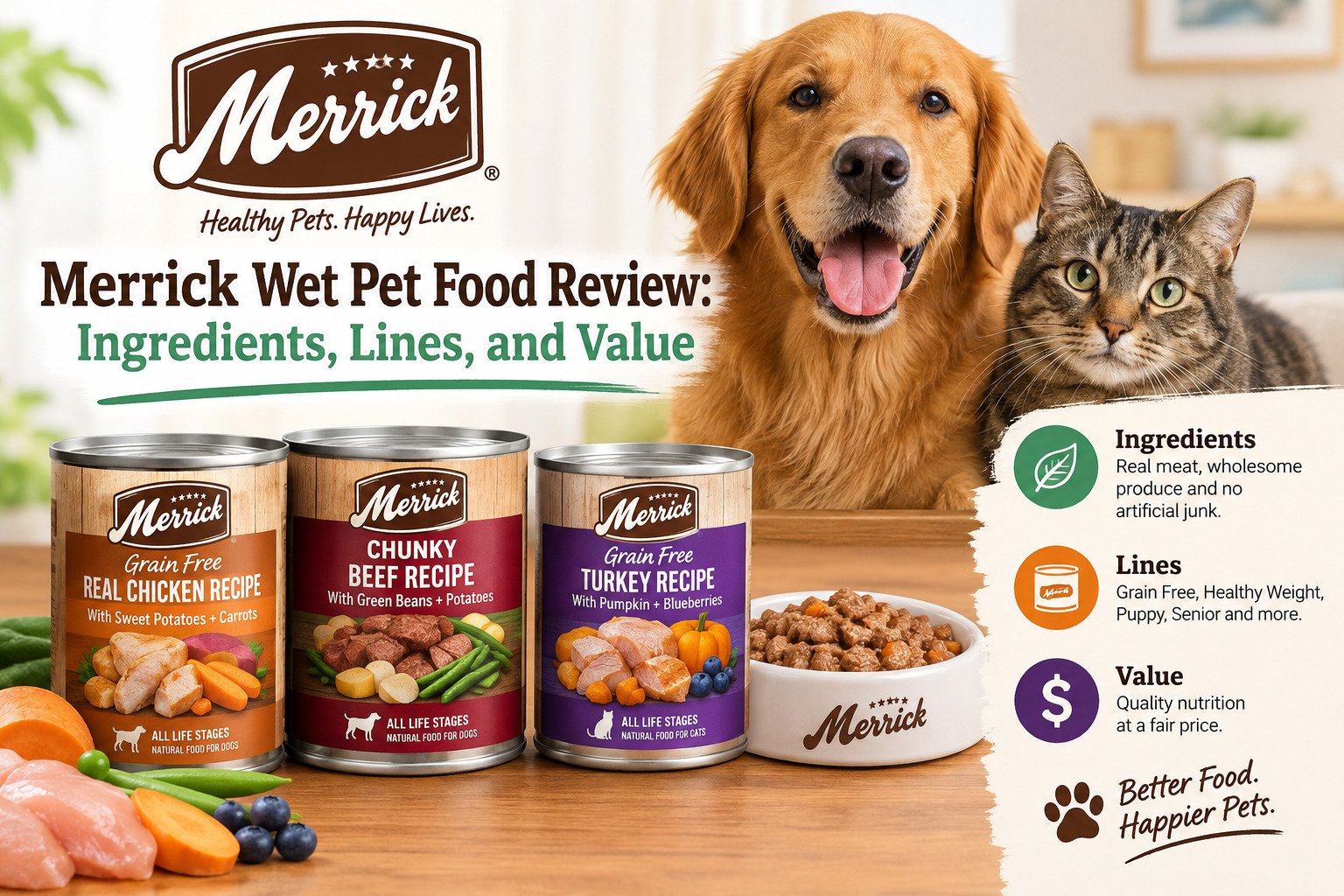
Choosing the right canned diet for a dog or cat often comes down to balancing high-quality animal protein with recognizable, digestible ingredients. Merrick wet pet food has established a significant presence across specialty pet retail by prioritizing deboned meat, poultry, or fish as the primary ingredient in nearly every recipe. Founded in Hereford, Texas, the brand built its reputation on kitchen-style cooking that emphasizes real whole foods over meat by-products and artificial additives.
For pet parents evaluating this brand, the primary appeal lies in ingredient transparency and variety. Merrick produces an expansive selection of stews, pâtés, shreds, and bone-broth-infused recipes tailored to diverse life stages and dietary restrictions. Evaluating whether these formulas fit your pet involves examining their nutritional architecture, manufacturing oversight, recipe differences across life stages, and overall cost relative to competing premium brands.
Nutritional Philosophy and Sourcing Standards
The foundational claim across Merrick recipes is that real, whole meat comes first. Unlike commercial formulas that lead with water, animal digest, or grain meals, Merrick lists named animal proteins—such as deboned beef, chicken, turkey, or salmon—at the top of the ingredient panel.
The brand’s nutritional architecture centers on three core principles:
- Whole-food inclusions: Recipes frequently incorporate whole produce such as sweet potatoes, carrots, apples, and blueberries to deliver dietary fiber, vitamins, and antioxidants naturally.
- Absence of low-cost fillers: Standard lines exclude corn, wheat, soy, artificial flavors, synthetic colors, and chemical preservatives like BHA or BHT.
- Purpose-led fat sources: Animal fats and plant oils (such as salmon oil and flaxseed) supply essential omega-3 and omega-6 fatty acids to support barrier skin health and coat condition.
Merrick manufactures its canned diets in company-owned facilities located primarily in Hereford, Texas. While minerals and vitamins are sourced globally to ensure exact nutritional premixes, the brand sources its fresh agricultural ingredients and meats from domestic growers and ranchers wherever possible.
Comparing Merrick Wet Food Product Lines
Merrick segments its wet formulas into several distinct product lines for dogs and cats, each serving different texture preferences and metabolic requirements.
| Product Line | Format & Texture | Best Suited For | Key Nutritional Differentiator |
| Grain-Free Classics | Smooth loaf / traditional pâté | Dogs & cats needing consistent texture; easy pill administration | Dense protein concentration with simple carbohydrate sources like peas or potatoes |
| Backcountry | Chunky cuts in rich gravy | Active pets requiring high moisture and palatability | Prey-model focus; combines multiple animal proteins with organ meats |
| Limited Ingredient Diet (LID) | Single-protein pâté | Pets with suspected food sensitivities or recurring allergies | One novel animal protein source; zero grain, soy, corn, or dairy |
| Slow Cooked BBQ / Chunky Stews | Shredded meat with visible vegetables in broth | Picky eaters; pet parents who prefer whole-food visibility | Humanized recipes mimicking home cooking; lower calorie density per ounce |
| Purrfect Bistro (Cat Only) | Shreds, morsels, and smooth pâtés | Obligate carnivores with high moisture and taurine demands | High crude protein; supplemented with cranberries for urinary tract support |
Grain-Inclusive vs. Grain-Free Formulations
While Merrick gained early popularity for grain-free cooking, the catalog includes grain-inclusive options featuring brown rice, oatmeal, and barley. This variety allows pet owners to tailor feeding programs based on veterinary guidance or personal feeding philosophies, avoiding grain-free diets if canine cardiac health considerations or breed predispositions are a factor.
Limited Ingredient Diets (LID) for Sensitive Digestion
For animals prone to cutaneous adverse food reactions or recurring gastrointestinal distress, Merrick LID canned diets isolate a single novel animal protein—such as duck, lamb, or turkey. These recipes remove common triggers including beef, chicken, dairy, and eggs, alongside omitting thickeners like carrageenan that some sensitive animals tolerate poorly.
Benefits and Practical Considerations
Hydration and Urinary Health
The primary functional benefit of wet food is its moisture content, which typically hovers between 78% and 82%. For cats, which possess a naturally low thirst drive and historically concentrate their urine, high-moisture canned diets like Purrfect Bistro provide essential hydration that supports renal function and lowers the concentration of urinary crystals. For dogs, wet food increases satiety without excessive calorie loads, serving as an effective tool for weight management.
Palatability and Dental Considerations
Animals recovering from illness, senior pets with diminished olfactory senses, or those experiencing dental decay benefit significantly from wet food’s aroma and softer consistency. However, wet food leaves soft residues around the gingival margin more readily than dry kibble, requiring pet owners to maintain consistent at-home dental care or professional cleanings.
Cost and Storage Realities
Merrick occupies an upper-tier price bracket. Feeding an adult medium-to-large breed dog exclusively on Merrick wet cans represents a substantial recurring expense compared to feeding a dry kibble base. Once opened, canned pet food must be covered, refrigerated, and consumed within 48 to 72 hours to prevent bacterial spoilage and nutritional degradation.
Daily Feeding and Rotation Strategies
Because wet food delivers lower caloric density per ounce than dry kibble due to moisture volume, portion control requires attention to label guidelines.
Total Daily Calorie Need = Base Metabolic Rate adjusted for Activity Level
Canned-Only Diet: Divide total kcal by kcal/can to find daily can fraction.
Mixed Feeding Diet: Replace 1 cup of dry kibble with equivalent calories from wet food (typically ~1/2 to 3/4 of a 12.7 oz can).
When integrating Merrick wet food into an existing feeding plan:
- Calculate the caloric trade-off: Never simply add a scoop of wet food on top of a full dry ration, as this introduces surplus calories that contribute to obesity. Subtract the caloric equivalent of the dry kibble being displaced.
- Transition gradually: Over 5 to 7 days, incrementally increase the proportion of Merrick wet food while reducing the previous diet to allow the intestinal microbiome to adapt.
- Serve at room temperature: Cold food straight from the refrigerator often reduces aroma and palatability. Allowing the portion to sit briefly or adding a splash of warm water enhances its scent profile for picky eaters.
Frequently Asked Questions
Is Merrick wet pet food complete and balanced on its own?
Yes. Merrick canned formulas are formulated to meet the nutritional levels established by the Association of American Feed Control Officials (AAFCO) Dog or Cat Food Nutrient Profiles for either maintenance or all life stages, depending on the specific recipe. They can be fed as a standalone diet or as a complementary mixer with dry food.
Who owns Merrick, and where is the food produced?
Merrick Pet Care was acquired by Nestlé Purina PetCare in 2015. Despite the acquisition, Merrick operates as an independent business unit, maintaining its primary kitchen facilities in Hereford, Texas, where it handles its own product development, ingredient testing, and canning operations.
Does Merrick use carrageenan as a thickener in its wet food?
Merrick has formulated the vast majority of its wet dog and cat lines without carrageenan, a seaweed-derived thickening agent that has raised digestive safety questions among pet nutritionists. Instead, the brand primarily uses natural thickeners like guar gum, agar-agar, or cassia gum.
How long can Merrick wet food sit out in a bowl?
Like most canned meats, wet food left in an open feeding dish should be discarded after two to four hours at room temperature. Bacteria proliferate rapidly once the vacuum seal is broken, especially in warm environments. Unused portions inside the can should be covered with an airtight lid and refrigerated immediately.
Merrick wet pet food provides high-grade animal protein, recognizable whole produce, and targeted options for animals requiring specialized digestive care. While the cost is higher than standard grocery-store brands, its nutritional integrity, avoidance of artificial fillers, and diverse texture profiles make it a strong option for pet parents looking to enhance their dog’s or cat’s hydration, mealtime enthusiasm, and daily nutrition.